
"coffee harvest delay"
200 article(s) found

In 2022, Brazil's Arabica coffee production will lose about 4% due to frost.
Journalist, coffee analyst and agricultural liaison coordinator Maja Wallengren reports in STIR Tea Coffee, the world's leading tea and coffee industry magazine, that frost affects areas so widely in Brazil's coffee-growing regions that it accounts for 65% of Brazil's total harvest during the average crop cycle. STIR Tea Coffee gets exclusive information from senior Brazilian government officials

A brief introduction to the description of the flavor and aroma characteristics of boutique coffee beans in Kaiser Louis Manor with smooth taste.
At such a high altitude, the low temperature delayed the ripening of the coffee berries, about a month later than the normal ripening period, while the fertile volcanic soil provided sufficient nutrients for the coffee, coupled with the excellent microclimate brought by the Baru volcano, Elida Manor was able to achieve good results in cup test competitions. In addition to creating good conditions for coffee cultivation, run Elida Villa.

Rwanda Coffee Production Process Geography Climate
Maraba coffee is grown in southern Rwanda, about 12 km (7 mi) from Butare and 150 km (93 mi) from the capital, Gigali. The project began in the Malaba area of Butare province, but was succeeded by local government organizations in 2006, and the area is now part of the Huye region of Southern province. Due to its proximity to the Great Rift Valley and the Newway Forest Mountains, the terrain of this zone

Introduction to the characteristics of Rwandan Coffee beans in Rwanda Coffee Flavor Manor area
Malaba Coffee grows in southern Rwanda, about 12 kilometers (7 miles) from the city of Butare and 150 kilometers (93 miles) from the capital, Gejali. The plan began in the Malaba area of Butare province, but was taken over by a local government organization in 2006, which is now part of the Huye district of the southern province. Due to its proximity to the East African Rift Valley and the Neuenway Forest Mountains, the terrain

The production process and methods of coffee in Rwanda introduce the characteristics of fine coffee
After the washed coffee beans are air-dried on the net rack, after washing the coffee beans many times to completely remove the remaining skin and sugary outer layer, the coffee beans are put into the sheltered rack to air-dry. Cooperative staff regularly flip coffee beans, while technicians continue to look for and pick out poor quality coffee beans. The two-week drying process takes place in the sun (preparing mulch in case of rain), but not

What are the characteristics of coffee in Rwanda
Following Kaiping (official Wechat account vdailycom) found that the coffee harvest season for coffee fruits at the beautiful cafe opened its own shop is during the main rainy season in the area, from March to the end of May. During the harvest season, farmers spend most of their day picking coffee fruits by hand. In the afternoon, the farmer held the coffee fruit in a traditional basket made of banana leaves.

Introduction of Rwanda Coffee varieties Malaba Coffee Chimeier Manor
Laba Coffee is grown in southern Rwanda, about 12 kilometers (7 miles) from the city of Butare and 150 kilometers (93 miles) from the capital, Gejali. The plan began in the Malaba area of Butare province, but was taken over by a local government organization in 2006, which is now part of the Huye district of the southern province. Due to its proximity to the East African Rift Valley and the Neuenway Forest Mountains, this area has many topography.

Geo-climatic production process of coffee beans in Rwanda
Malaba Coffee grows in southern Rwanda, about 12 kilometers (7 miles) from the city of Butare and 150 kilometers (93 miles) from the capital, Gejali. The plan began in the Malaba area of Butare province, but was taken over by a local government organization in 2006, which is now part of the Huye district of the southern province. Due to its proximity to the East African Rift Valley and the Neuenway Forest Mountains, the terrain

Panamanian Coffee with excellent quality and Special Flavor introduction to FST San Teresa Manor of Baru Volcano
Elida Manor has a total area of 65 hectares, more than half of which are located within the Baru Volcano National Park, 30 hectares of the estate are planted with coffee trees, and the remaining 35 hectares are virgin forests. Coffee plantations range from 1670 to 1850 meters above sea level, making it one of the two highest coffee farms in Panama. (the other estate with these elevations should be located in the Vulcan Valley.

Introduction of Panamanian coffee flavor and taste high-quality coffee beans in Panamanian coffee producing area
Panama is very suitable for the survival of butterflies because of its climate. Panama is also known as the country of butterflies. Panama has a variety of butterflies, colorful and very beautiful. So one of Panama's most important specialties is butterfly specimens. Colorful butterfly specimens are very good decorations, and it's good to hang them at home. There are a lot of indigenous people living in Panama, and they belong to
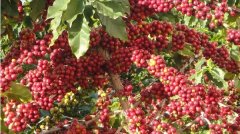
Ecuador is a country with all the conditions for producing the highest quality coffee.
Ecuador is a country with all the conditions for producing the highest quality coffee. Geographically located between Colombia and Peru, the inland mountains provide sufficient altitude for the production of high-quality SHB (Strictly Hard Bean: hard beans produced in the mountains). In addition to good climatic conditions, there is also fertile soil for the production of Ecuadorian coffee.

Brazilian coffee farmers demand renegotiation
Professional coffee knowledge exchange More coffee bean information Please pay attention to coffee workshop (Weixin Official Accounts cafe_style) As we all know, Brazil is the world's largest coffee producer, its output is twice to three times that of Colombia, the world's second largest producer. Brazilian coffee has a significant impact on coffee prices. Two frosts in 1994 led to a decline in Brazilian coffee production, causing global coffee

The production process of coffee beans in Rwanda: how is high-quality coffee produced?
Then the mechanic transported the coffee beans to the technology center near Chez. Some machines installed in warehouses on the hills remove the cutin from coffee beans. The staff sent the coffee beans to nearby research institutes for final quality control-manual sorting, which was carried out by several experienced women. After bagging and labeling according to its quality, the coffee beans can be stored in the warehouse to wait.

Full grain Rwandan coffee flavor Introduction Western Province Lutexiluo region Introduction
Rwandan coffee characteristics: Rwandan coffee taste is described as grassy aroma, with tropical climate characteristics, this coffee presents a sweet fruit, it can also give people a fresh, clear and fresh feeling. Bourbon coffee grown in Rwanda is marvellous for its fruity sweetness, its rich aroma, without any convergence, and its aftertaste

What are the coffee farms in Panama? Panamanian Alida Manor in the Pokuit area of Panama
Professional coffee knowledge exchange more coffee bean information please follow the coffee workshop (Wechat official account cafe_style) Amida Manor in Poquet Valley, Panama, sun Panama Bouquete Elida Catuai Natural tropical fruits, peach wine, fresh strawberries, Avon mango, pineapple, peach juicy sweet and sour, vanilla, wine flavor, dark berries, good sweetness,

Taste of Rwanda boutique coffee beans Malaba coffee is introduced in the manor area.
Malaba Coffee grows in southern Rwanda, about 12 kilometers (7 miles) from the city of Butare and 150 kilometers (93 miles) from the capital, Gejali. The plan began in the Malaba area of Butare province, but was taken over by a local government organization in 2006, which is now part of the Huye district of the southern province. Due to its proximity to the East African Rift Valley and the Neuenway Forest Mountains, the terrain

Growing in the Lutesilo region of the western province of Malaba in southern Rwanda
Malaba Coffee grows in southern Rwanda, about 12 kilometers (7 miles) from the city of Butare and 150 kilometers (93 miles) from the capital, Gejali. The plan began in the Malaba area of Butare province, but was taken over by a local government organization in 2006, which is now part of the Huye district of the southern province. Due to its proximity to the East African Rift Valley and the Neuenway Forest Mountains, the terrain
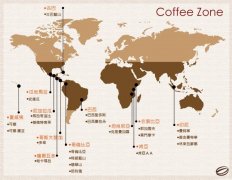
Global warming | impact of Climate on Coffee cultivation three difficult problems of Coffee Belt transfer and cultivation
There may be no greater existential threat to coffee and the world as a whole than climate change. We often talk about climate change in coffee, and it is generally believed that global warming will have a negative impact on the way coffee is grown. But how exactly does climate change affect coffee? In order to better understand, let's study some of the ways in which temperature change destroys coffee production.

Guatemala Antigo Coffee producing area Information Guatemala Antigua Coffee beans Story
For the exchange of professional baristas, please follow the DonGus Coffee Manor in the alpine mountains of the volcanic mountains 5000 feet above the origin of the Coffee Workshop (official Wechat account cafe_style) in Antigo, Guatemala. BALANJOYO means Tiger Mountain in Mayan language, because the manor, which has been handed down for five generations, is in the Tiger Mountain Mountains. Variety Arabica species. Characteristic ● due to Tiger Mountain Coffee Manor location

Brazilian Queen's Manor Red and Yellow Bourbon Coffee beans Queen's Manor Coffee Flavor Story
Introduction of boutique coffee beans: Hirado varieties: yellow bourbon treatment: sun bourbon species, native to Bourbon Island in the Indian Ocean (now known as Reunion Island), is the second species of Typica mutation, and Ironka belong to the oldest existing coffee varieties, the green fruit will show bright red when ripe, while the yellow bourbon species is hybridized with other varieties. Because of its production